

How To Dry Clean Suit At Home
Dry Cleaning
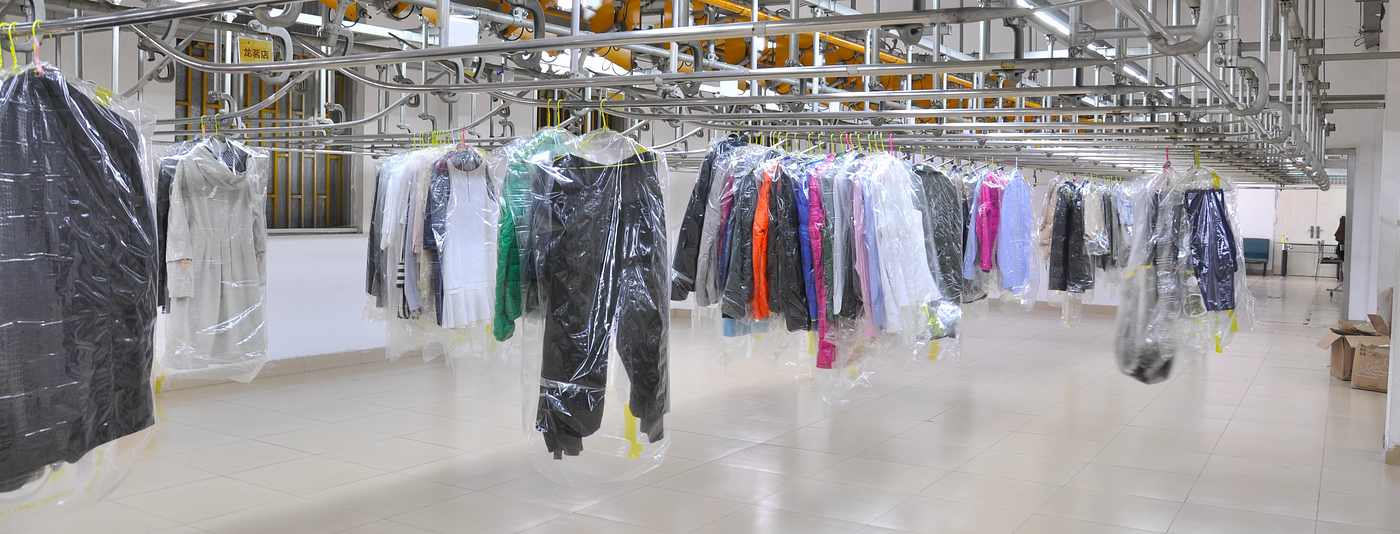
Dry Cleaning is a seemingly mysterious topic — there's a identify and you take clothes at that place and then y'all choice upwardly clean clothes. But what is it, how does it piece of work, and why do some apparel require information technology?
Let's offset with the easiest to unpack, what is dry cleaning? Information technology is cleaning, but it's not "dry", although it doesn't traditionally use water. Broadly speaking, dry cleaning would exist better described equally "not hot cleaning", information technology encompasses a number of cleaning methods which don't involve either hot cleaning liquids or heating the clothes to dry them afterward washing.
Dry out cleaners as a business are a combination of several related garment cleaning services — garment cleaning itself, alterations and repair, customer-service, and often footwear cleaning. Although the trend is changing, nigh dry cleaning "locations" don't actually do the cleaning on-site, instead the garments are ingested and sent for cleaning, then held for pickup. In addition to removing the demand to manage machines on-site, the plant-based procedure means at that place's always a steady catamenia of garments for cleaning and with a larger pool of garments, more than specialized equipment can be used instead of generalist machines.
The dry stores were selection up and drib off locations. Garments from these locations were picked up iii times a 24-hour interval and taken dorsum to the plant for processing.
The iconic hanger serpent dominating the retail presence isn't anything magical, it's just an efficient mode to shop and retrieve a large number of garments, it excels over rolling garment racks when you consider the variability in drib-off time and pickup-time which would either leave half-empty racks or require continuous rearranging.
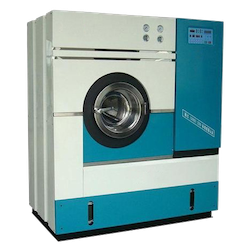
The dry cleaning cycle shares near of the process with the common washer-dryer:
- Garments are soaked and agitated in a cleaning solution.
- The solution is either continuously filtered or drained and a rinse cycle uses clean liquid.
- The cleaning solution is mechanically removed from the garments.
- The cleaning solution is evaporated from the garments.
- The garments are removed from the equipment and, depending on the garment, hung, pressed, or folded.
At that place are two enormous differences between this process and traditional laundry though: the cleaning solution doesn't use water and the washing and drying temperature is shut to room temperature.
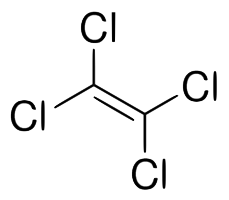
Unlike traditional laundry, which generally uses detergent dissolved in h2o, dry cleaning uses an undissolved solvent: typically chlorine based like PERC, petroleum based such as Stoddart Solvent, or even super critical Carbon Dioxide. All of these are better at dissolving grease, oil marks, and other organic deposits which makes them more constructive cleaners for some stains, but the real reason they're used is they all have significantly faster evaporation rates (college vapor pressure) virtually room temperature, it'southward this property which makes dry out cleaning "work".
The dry cleaning "wash" cycle occurs with room temperature solvents and, after a spin cycle, the air used for drying is only around 60℃ (which is cooler than home dryers) and more than importantly only lasts a few minutes, which keeps the garments from condign warm.
Keeping garments from getting warm while cleaning is, primarily, the reason for dry out cleanings existence. The bulk of dry clean only garments need special care because the fabric shrinks when heated, or worse, the garment is fabricated of multiple fabrics which shrink differently when heated. A smaller subset is garments which would dissolve (like glued on sequins) or discolour when heated.
Not as common, but the solvents used in dry out cleaning can prevent colour bleed — the colour either doesn't dissolve as easily in the not-polar solvent or the dissolved colour doesn't transfer dorsum from the solvent to other parts of the garment.
For some types of stains, the solvent cleaners are more constructive at removing the stain, just for other types (like the salts deposited from perspiration or deicing table salt), hot h2o is a more than effective cleaner.
Separated from the mechanics of the cleaning process, the dry cleaners staff are professional garment cleaners and they tend to actually become through all the cleaning options — spot treating, steaming, vacuuming, etc earlier declaring a stain untreatable. Depending on the garment, they're likewise better at preparing the garment for washing (removing buttons, basting trim to go on information technology in place, etc).
If the tag says Dry out-CLEAN Only, obey it. If it says DRY-CLEAN, that ways that is the recommended method, non the simply method.
Practice you demand to actually go to the dry cleaners? It depends. If washing the garment in room temperature water and air drying gives you the desired result, it's a perfectly valid method — for a very pocket-size number of fabrics which are irreparably inverse past h2o assimilation (like suede), solvent cleaning is the but choice.
So if this all sounded simple, it's because the hardest function was glossed over. Dry cleaning as a concept is fairly simple — and it was unproblematic in implementation until the late 20th century — only the complication comes from handling the cleaning solution. Unlike water and detergent, the fresh cleaning solution is expensive and in a limited supply, the used cleaning solution tin can't only be poured in the sanitary sewer, and the evaporated rinse tin't be vented to the atmosphere.
Shipping and storing the solvent is complicated by hazardous chemical restrictions, the motorcar needs dispensing equipment to pump the solvent into the launder chamber, the used solvent is filtered and re-used instead of beingness disposed of, and the evaporated solvent is drawn over a complex cooling and filtering appliance to condense the solvent before venting.
Open tabs AKA further reading
- Dry out Cleaning (Wikipedia)
- How Dry out Cleaning Works
- How to Wash Dry-Clean-Only Clothes at Home
- 13 Things your Dry out Cleaner Won't Tell You
- What Really Happens at the Dry Cleaner
- Do I Really Need to Dry-Clean This?
- What is Dry out Cleaning and Why Practice Y'all Need It?
- Why must suits be dry cleaned just?
- How Dry Cleaning Works (Video)
- How Dry Cleaning Works (Different Video)

Source: https://medium.com/you-need-to-know-these-things/dry-cleaning-74540d60f441
Posted by: stewartspive1970.blogspot.com
0 Response to "How To Dry Clean Suit At Home"
Post a Comment